GDACon26: The chips won’t wait for Germany
Written by Olga Khyzha
Project Manager
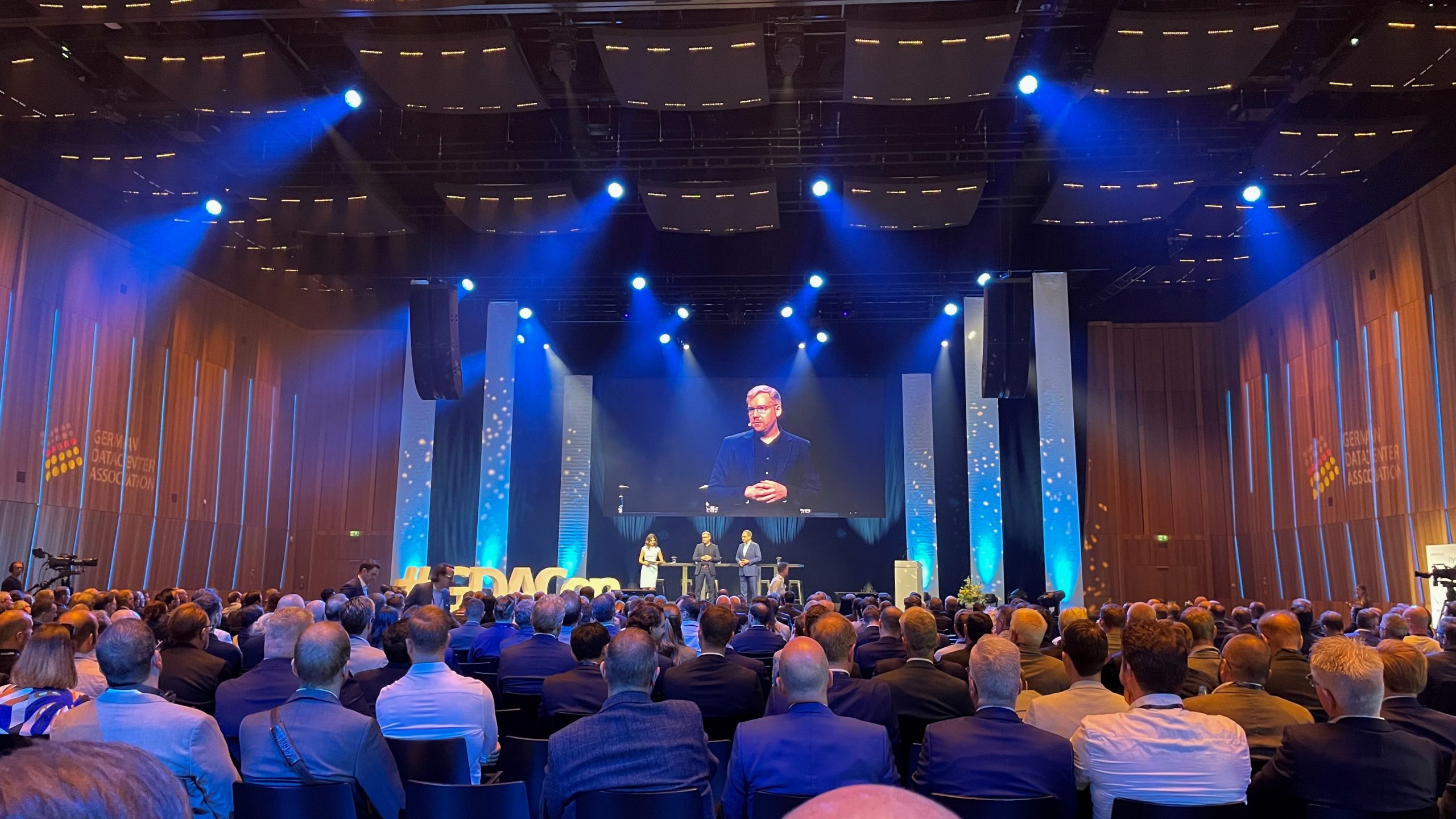
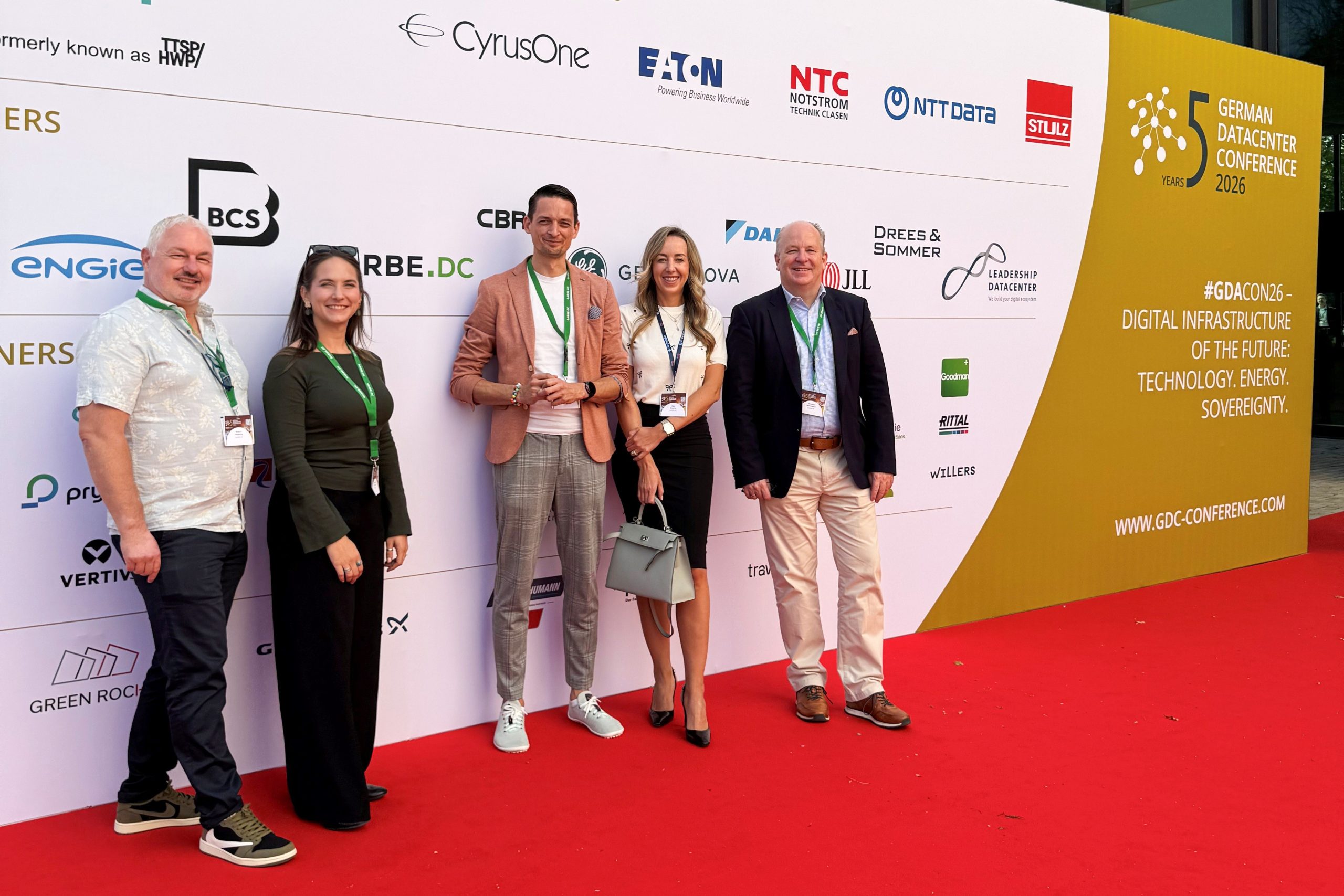
Two days at GDACon26 in Bad Vilbel left me with many thoughts.
First, a huge thank you to the German Datacenter Association team. Once again, excellent organization and, more importantly, the right people and conversations in one place.
But after several years of attending these discussions, one thing struck me: The technology conversation has changed dramatically. Some of our infrastructure problems haven’t.
From chip to facility
AI is fundamentally changing how we think about data centers. Look at the direction of NVIDIA’s Vera Rubin platform. We are no longer talking simply about putting more powerful GPUs into existing facilities.
The chip increasingly influences the rack. The rack influences cooling. Cooling and compute density influence power architecture. Power architecture influences the facility. And the facility ultimately meets the grid.
Chip → rack → cooling → power → facility → grid.
The boundaries between IT and facility are disappearing. And that creates something I think our industry needs to recognize:
The GPU roadmap is becoming the facility roadmap.
The technology cycle is getting faster, not slower. And then we arrive at the uncomfortable part.
Germany and the same conversation
Grid connections. Power availability. Permitting. Municipalities. Regulation. The Genehmigungsverfahren.
Haven’t we been discussing some of these issues for years? That’s what worries me.
Germany undoubtedly has one of Europe’s most important data center ecosystems. But being important today doesn’t guarantee being the preferred location tomorrow. Because AI capacity doesn’t have to wait for Germany.
If Germany is not fast enough, France is next door
And France is not being shy about its ambition.
France is actively positioning itself around abundant low-carbon electricity, suitable data center sites and streamlined procedures. It has also announced significant AI and data center investment and is competing to host European AI Gigafactory capacity.
President Macron made the proposition particularly clear at Choose France this year: energy, simplification and speed. He highlighted France’s position as Europe’s largest electricity exporter, its nuclear base and its efforts to accelerate data center projects through simplified procedures and a single point of entry.
So here’s the provocative question:
If an investor can deploy AI capacity faster 500 km away, how long will “Frankfurt is Frankfurt” remain a sufficient argument?
Capital has no nostalgia. GPUs don’t care about borders. And AI workloads won’t wait patiently for a permit.
This isn’t Germany versus France, by the way. Germany and France are actually cooperating on European AI infrastructure and have explicitly identified data center capacity, energy and better planning and permitting as shared priorities.
But cooperation doesn’t remove competition for the next billion euros of investment.
Maybe we need a Mayor Data Center Day
I’m only half joking.
We have excellent data center conferences. Operators meet developers. Developers meet investors. Vendors meet hyperscalers. We discuss the same challenges with people who already understand them.
Maybe we need to stop talking only to ourselves.
What if we brought together mayors, municipalities, utilities, planners and the data center industry? Not another sales conference. A working day.
Let municipalities tell us what makes these projects difficult. Let our industry explain why AI is changing power densities, cooling, timelines and investment decisions.
Then put one question on the screen:
What can Germany simplify at municipal, state and federal level to make a responsible data center project faster to approve?
Not fewer environmental standards. Not shortcuts around communities. Less complexity. More predictability. Faster decisions.
Maybe Mayor Data Center Day sounds funny. But perhaps that’s exactly the conversation we’re missing.
My biggest takeaway from GDACon26
For years, location strategy was about land, connectivity and power. I think another metric is becoming equally important:
TIME-TO-INFRASTRUCTURE.
How quickly can a country convert demand into operating megawatts?
The winners of the AI infrastructure race may not simply be the countries with the most power. They may be the countries that can align chip, facility, grid, municipality and government fastest.
France clearly understands that speed is part of the proposition. Germany needs to make sure it does too.
Because the next generation after Vera Rubin will come. And the generation after that.
The chip roadmap will not slow down because our permitting roadmap isn’t ready.
So perhaps the question after GDACon26 isn’t whether Germany needs more data centers. It’s much simpler:
How fast can we actually build them?
And if the answer is not fast enough… someone else in Europe will.